Agriculture a 'major contributor' to forecasted drop in European air quality

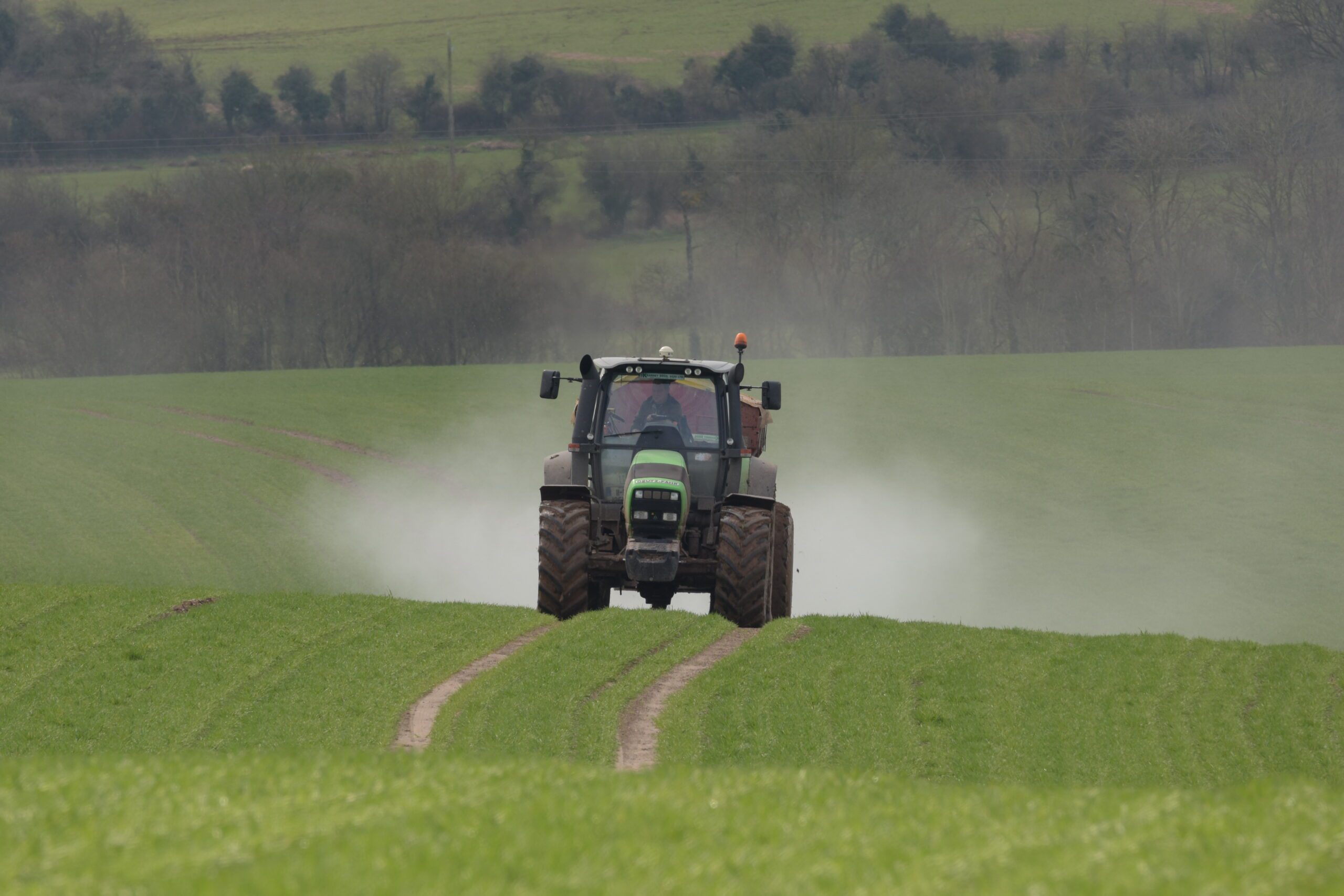
Agriculture has been highlighted as a leading factor behind an expected deterioration of air quality across Europe in the coming days, according to the EU's air monitoring service.
Copernicus Atmosphere Monitoring Service (CAMS), implemented by the European Centre for Medium-Range Weather Forecasts, said this deterioration is driven by increased concentrations of fine particulate matter (PM2.5).
CAMS said: “While a familiar springtime pattern, this represents a notable situation shaped by fine particulates from multiple sources, particularly agriculture.
“Ammonia emissions associated with fertiliser spreading in this period combine with nitrogen oxide emissions to form aerosols.
“This chemical process is intensified by the stable meteorological conditions, namely cold temperatures in the morning and warmer temperatures later in the day.”
CAMS added that “expected rises in birch and alder pollen concentrations will further contribute toward poor air quality”.
Several countries
The forecast indicates that this increase of particulate matter concentration will lead to reduced air quality across several countries in Europe, including Ireland.
Germany, France, the Netherlands, Belgium, and the UK are also expected to experience this reduction in air quality.
As well as agricultural ammonia emissions, there is also background pollution levels linked to fossil fuel combustion.
This background pollution, especially across parts of Eastern Europe and the Balkans, remains a consistent contributor to regional air quality, reflecting more typical emission patterns.
Laurence Rouil, director of CAMS, said: “Forecasts show that ground level fine particulate concentrations are likely to increase over the coming days.
“Agricultural ammonia emissions combined with nitrogen oxide emissions from other sectors like road transport, are expected to be a major contributor to PM2.5 formation, causing increased concentrations of fine particles in the atmosphere of the affected areas.
“Whilst this situation is not unusual in spring, it is notable and can be intensified by stable and mild meteorological conditions and atmospheric inversions.”
Fluctuations
Recent weeks have seen fluctuations in particulate pollution due to human causes (like residential heating and biomass burning) and Saharan dust transport across Europe.
Several dust plumes from North Africa moved into western and northern Europe in early March, causing hazy skies and temporary spikes in particulate matter – mainly PM10 – even reaching regions such as the UK.
CAMS said: “With this new episode and the role played by agriculture emissions, it shows the diversity and complexity of particulate matter pollution in Europe.”